The Oviedo sculpture trail: every statue, in order and on foot
Updated 12 November 2026 · Written by the maikhomes team, holiday flats in Oviedo since 2017
Oviedo has more than a hundred sculptures on its streets, and the city council suggests a one-hour walking route from El Fontán to the Cathedral. It is about 2.8 km on foot and takes in La Regenta, Mafalda, Woody Allen and the Culis Monumentalibus.
What the trail is like
This is Oviedo City Council's official route: it starts in Plaza del Fontán and ends in Plaza de Alfonso II el Casto, in front of the Cathedral. The council puts it at an hour.
We measured it on OpenStreetMap, following the order of the council's map: about 2.8 km and 37 minutes on foot without stopping. It is free: every sculpture is out on the street.
The walk loops round the centre: the old quarter, La Escandalera, Campo de San Francisco park, Calle Pelayo and back to the Cathedral. The official map, with arrows, is on page two of the council's leaflet (in Spanish).
The stops, in order
| Stop | Where | Sculptures and artists |
|---|---|---|
| 1 | Plaza del Fontán | La Bella Lola, by Carmen Fraile |
| 2 | Plaza de Daoíz y Velarde | Vendedoras del Fontán (the Fontán market women), by Amado González «Favila» |
| 3 | Plaza de la Constitución | El León Guasón (the grinning lion), at the town hall door |
| 4 | Plaza de Trascorrales | La Pescadera (the fishwife), by Sebastián Miranda; Vendedor de pescado (the fishmonger), by José Antonio García «Llonguera»; La Lechera (the milkmaid), by Manuel García Linares |
| 5 | Plaza de Alfonso II el Casto | La Regenta, by Mauro Álvarez |
| 6 | Plaza de Porlier | El regreso de Williams B. Arrensberg («the traveller»), by Eduardo Úrculo |
| 7 | Calle San Francisco | Mujer sentada (seated woman), by Manolo Hugué |
| 8 | Plaza de la Escandalera | Asturcones (Asturian ponies), by Manolo Valdés; La Maternidad (motherhood), by Fernando Botero |
| 9 | Campo de San Francisco | Encarna con Chiquilín, by Sebastián Miranda; José Tartiere and the Clarín fountain, by Víctor Hevia; Mafalda, by Pablo Irrgang; Armando Palacio Valdés, by Gerardo Zaragoza; Sabino Fernández Campo, by Víctor Ochoa |
| 10 | Calle Milicias Nacionales, 1 | Woody Allen, by Vicente Menéndez «Santarúa» |
| 11 | Calle Pelayo | El Diestro (the bullfighter), by Miguel Ortiz Berrocal; La Bailarina (the dancer), by Santiago de Santiago; Culis Monumentalibus, by Eduardo Úrculo; Esperanza caminando (Esperanza walking), by Julio López Hernández |
| 12 | Plaza del Carbayón | Plácido Álvarez-Buylla, by Gerardo Zaragoza; reliefs of the former National Insurance Institute, by Faustino Goicochea; La Concordia, by Esperanza d'Ors; La Pensadora (the thinker), by José Luis Fernández |
| 13 | Plaza de Juan XXIII | Amigos (friends), by Santiago de Santiago |
| 14 | Calle Jovellanos, corner of Gascona | La Gitana (the Romani woman), by Sebastián Miranda |
| 15 | Calle Jovellanos | Monolith to Jovellanos, by Juan Antonio de Villanueva y de Montes |
| 16 | Plaza Feijoo | Fray Benito Jerónimo Feijoo (Father Feijoo), by Gerardo Zaragoza |
| 17 | Plaza de Alfonso II el Casto | Alfonso II, by Víctor Hevia, and the Garden of the Kings |
Source: Oviedo City Council «Ruta de las Esculturas» leaflet (order, artists and places) and OpenStreetMap (the location of each sculpture), checked on 12 November 2026.
From El Fontán to Trascorrales: the market women
The trail starts in Plaza del Fontán with La Bella Lola, by Carmen Fraile: a woman sitting on a bench, her head resting on her hand. She is a replica of the one on the seafront at Torrevieja, a gift from that town when it was twinned with Oviedo.
She stands for the women who waited on shore for those who went fishing or emigrated overseas.
Next door, in Plaza de Daoíz y Velarde, are the Vendedoras del Fontán, by Amado González «Favila»: two women selling Faro pottery, the traditional ware of Oviedo. They honour all the women who have sold their goods in this square.
In Plaza de la Constitución, look at the town hall door: it is guarded by the León Guasón, the «grinning lion», his face turned to one side and smiling. It was once part of a four-spout fountain that stood in this square until it was pulled down in the nineteenth century.
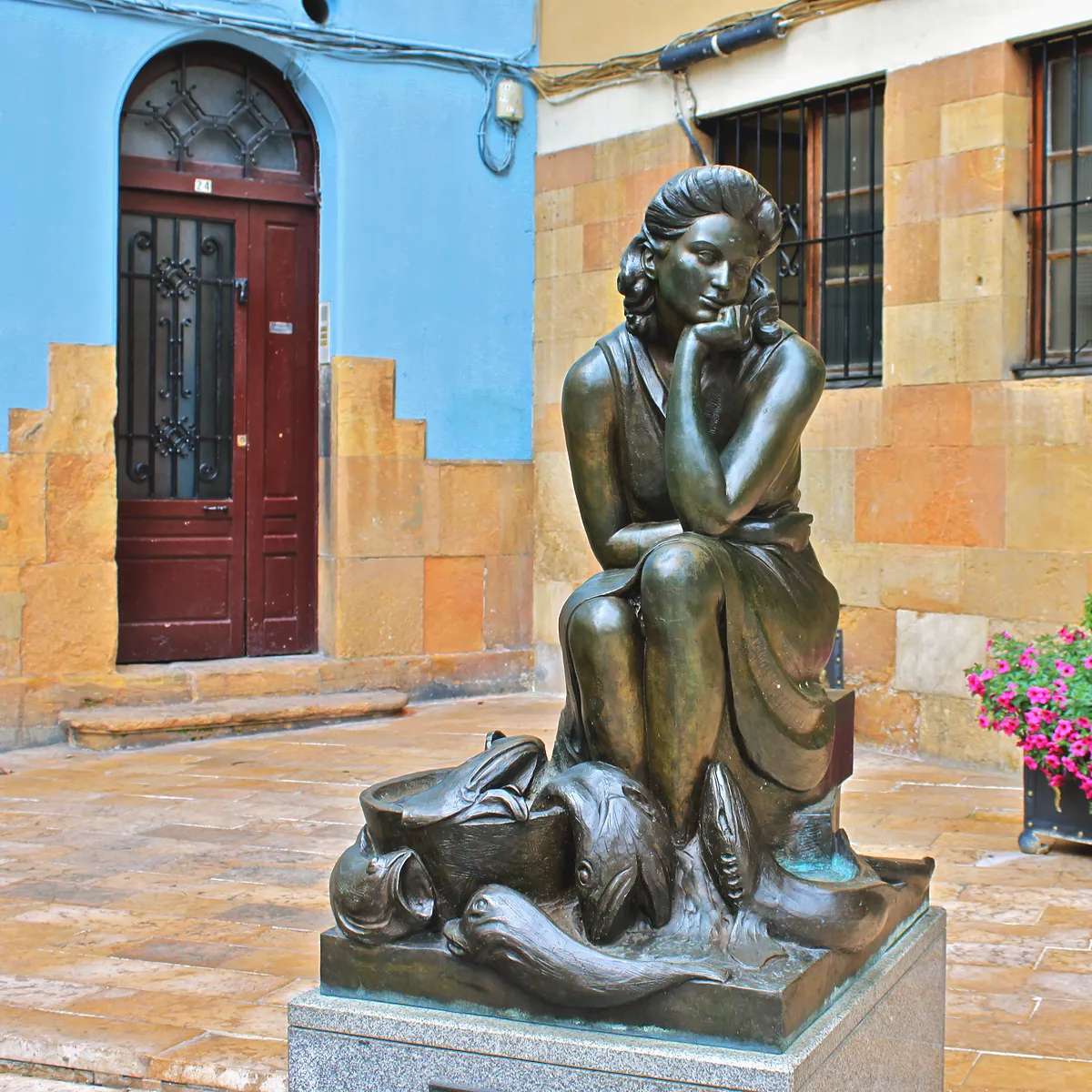
Trascorrales has three more. La Pescadera, the fishwife by Sebastián Miranda, sits with her basket of fish at her feet: she is a tribute to «La Cachucha», a well-known fish seller from Gijón. A few metres away, the Vendedor de pescado by José Antonio García «Llonguera» offers his catch.
And in the same square La Lechera, the milkmaid by Manuel García Linares, arrives with her donkey loaded with milk churns.
From the Cathedral to La Escandalera: La Regenta, the traveller and Botero
From Trascorrales you walk on to Plaza de Alfonso II, in front of the Cathedral. Here stands La Regenta, by Mauro Álvarez: Ana Ozores, the heroine of Clarín's novel, who crossed nineteenth-century Oviedo to meet her confessor at the Cathedral.
A few steps on, in Plaza de Porlier, an elegant man with a suitcase and an umbrella has just arrived and is looking towards the Cathedral. He is El regreso de Williams B. Arrensberg, by Eduardo Úrculo, though he is popularly known as «the traveller».
On Calle San Francisco, Manolo Hugué's Mujer sentada sits on the ground, in a pose typical of this sculptor. At the end of the street opens Plaza de la Escandalera.
Manolo Valdés's Asturcones are three life-size horses of a small Asturian breed that the Romans already prized. Beside them is La Maternidad by Fernando Botero: a naked mother holding her child, with Botero's trademark rounded forms.
Campo de San Francisco: Mafalda and friends
From La Escandalera you walk into Campo de San Francisco, the big park in the middle of town. The trail loops through it, and six sculptures gather here.
There is Sebastián Miranda's Encarna con Chiquilín, a woman breastfeeding a baby, and José Tartiere by Víctor Hevia, seated among figures by Álvarez Laviada. There is also the Clarín fountain, with his bust, by Víctor Hevia.
The group is completed by Gerardo Zaragoza's stone bust of the writer Armando Palacio Valdés and Víctor Ochoa's monument to General Sabino Fernández Campo.
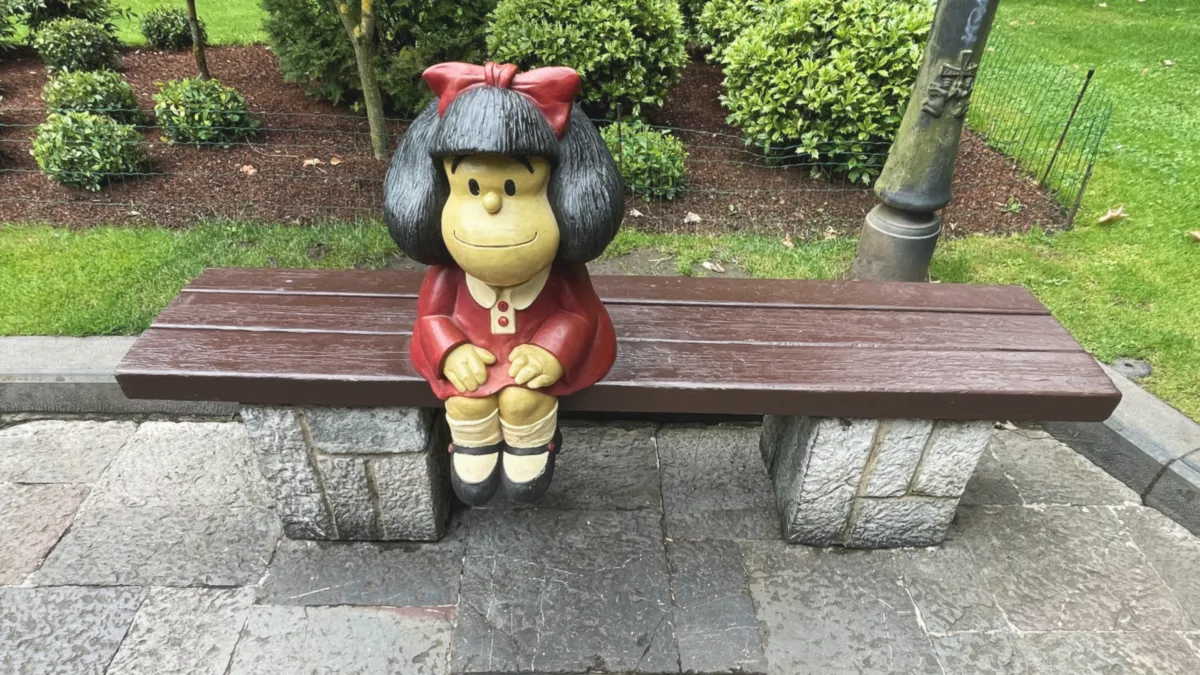
The one everybody looks for is Mafalda, by Pablo Irrgang. She sits on a bench by the duck pond, with plenty of room for you to sit down next to her. She is the character created by the Argentine cartoonist Quino, who received the Prince of Asturias Award for Communication and Humanities in 2014.
Woody Allen and Calle Pelayo
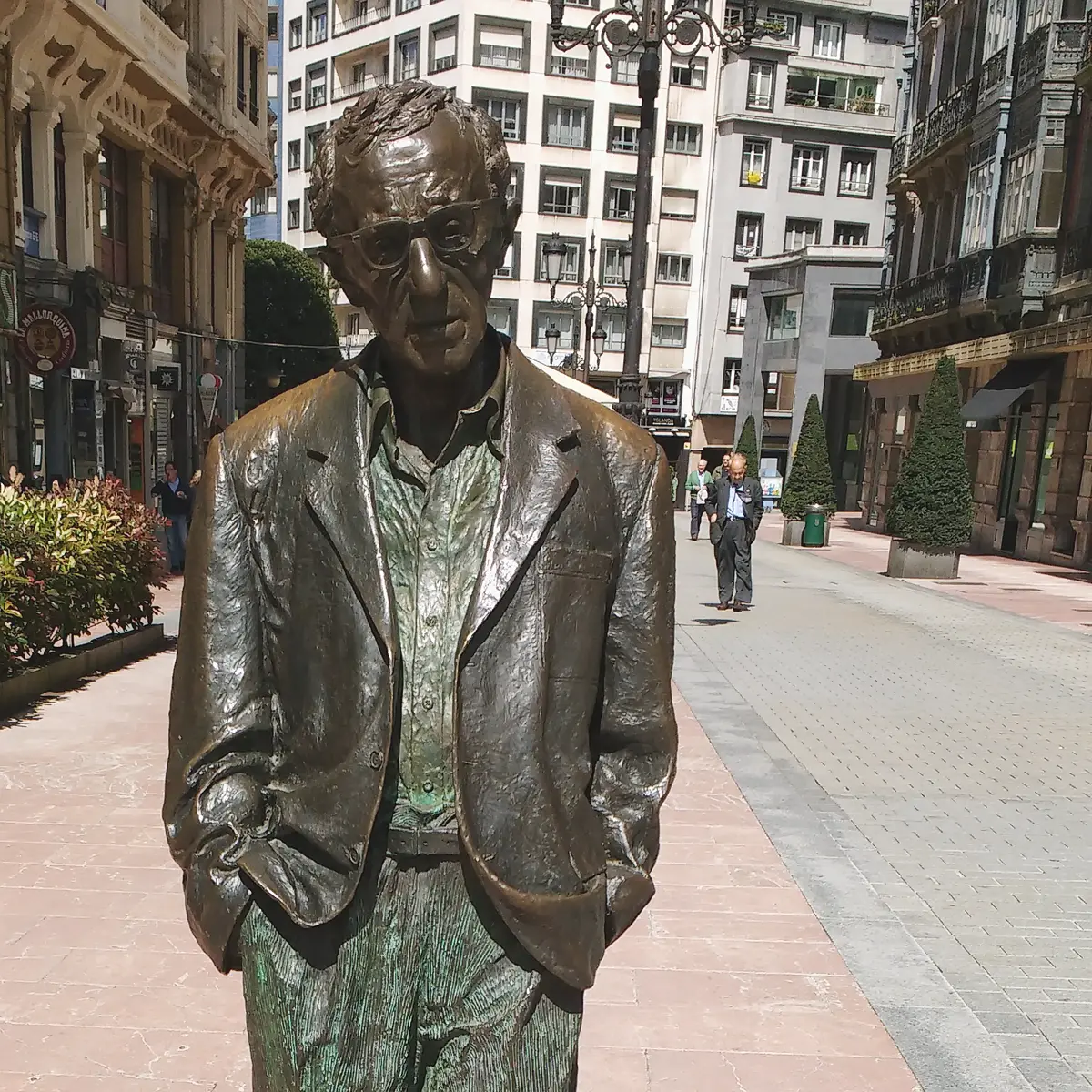
From the park you come out on Calle Milicias Nacionales. At number 1, Woody Allen strolls by at life size, a work by Vicente Menéndez «Santarúa». The city dedicated it to him to thank him for his praise of Oviedo. In 2002 he received the Prince of Asturias Award for the Arts.
Where Milicias Nacionales crosses Calle Pelayo stands El Diestro, by Miguel Ortiz Berrocal: a bullfighter's torso made of pieces that can be taken apart. Carry on along Pelayo towards the Campoamor Theatre and you meet La Bailarina, the dancer by Santiago de Santiago, and Esperanza caminando by Julio López Hernández, a student reading as she walks.
Next to the Campoamor is the Culis Monumentalibus, by Úrculo again: a sculpture four metres tall, a pair of buttocks on two huge legs, the same from the front and from behind. He took the name from an article Camilo José Cela wrote about his work. Walk round it for the photo.
From El Carbayón back to the Cathedral: the end of the trail
In Plaza del Carbayón, the doctor Plácido Álvarez-Buylla, by Gerardo Zaragoza, leans on a tree trunk. The trunk recalls the Carbayón, the great oak on Calle Uría that was felled at the end of the nineteenth century.
In the same square are La Concordia by Esperanza d'Ors, seven naked figures moving forward together, and La Pensadora by José Luis Fernández. There are also the reliefs of the former National Insurance Institute, by Faustino Goicochea, with scenes of work in industry and on the land.
Calle Argüelles takes you to Plaza de Juan XXIII, where a faceless man and woman hold hands: they are Amigos, by Santiago de Santiago. On the corner of Jovellanos and Gascona waits La Gitana, another Sebastián Miranda, with her headscarf and her basket.
This is where Gascona, the street of cider houses, begins: see Gascona, the cider boulevard.
The loop goes on along Calle Jovellanos, past the monolith dedicated to Jovellanos, and through Plaza Feijoo. There Gerardo Zaragoza's Father Feijoo sits deep in thought with a book in his hand: he lived for over fifty years in the monastery of San Vicente, now the Archaeological Museum.
The trail ends back in Plaza de Alfonso II. At the foot of the Cathedral stands King Alfonso II, by Víctor Hevia, who moved the capital of the kingdom to Oviedo. Behind him, in the Garden of the Kings, are all the kings of the Asturian monarchy.
If you have time left, the Cathedral and its Holy Chamber can be visited inside: see our old town walk, square by square.
More sculptures beyond the trail
The trail is only part of it: Oviedo's tourist office counts more than a hundred sculptures across the city. The council itself suggests carrying on through the rest of Campo de San Francisco, La Losa at the Renfe railway station, Parque del Oeste, La Florida, El Campillín or El Milán.
Very close to Woody Allen, at Calle Palacio Valdés 15, is the statue of the singer Tino Casal: about 170 metres away, two minutes on foot.
For the rest of the city, from the pre-Romanesque churches to Mount Naranco, see our guide to what to see in Oviedo.
Staying near the trail
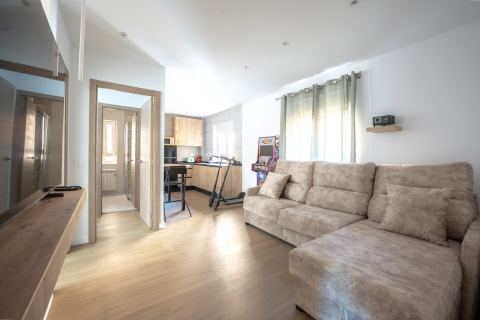
Our flats are in neighbourhoods close to the centre, not in the old quarter. From the street door of each flat to Plaza del Fontán, where the trail starts, it is 9 to 24 minutes on foot.
And from the Cathedral, where it ends, it is 11 to 25 minutes back. We measured it on OpenStreetMap on 12 November 2026.
 Aureliano San Román 1B
Parking space included · Cot available
Registered holiday home · VUT.7891.AS
 Gil Blas 7 - 28
Parking space included · Cot available
Registered holiday home · VUT.2707.AS
 Miguel Ángel Blanco 2º
Parking space included · Cot available
Registered holiday home · VUT.4615.AS
See which apartments are free on your dates
«Every flat is our own: we designed them ourselves and we look after everything ourselves, with a lot of love.»Marcos Cuesta, maikhomes
Holiday flats in neighbourhoods close to the centre of Oviedo, since 2017. Pick your dates and see which ones are free:
Frequently asked questions
Where does the Oviedo sculpture trail start and end?
It starts in Plaza del Fontán, with La Bella Lola, and ends in Plaza de Alfonso II el Casto, in front of the Cathedral. That is the city council's route, and it puts it at an hour.
How long does the trail take?
An hour, according to the city council. Walking without stopping it is about 2.8 km and 37 minutes, measured on OpenStreetMap in the order of the official map.
Where is the Woody Allen statue in Oviedo?
At Calle Milicias Nacionales 1, a few steps from Campo de San Francisco park. It is life-size, by Vicente Menéndez «Santarúa», and shows him out for a stroll.
Where is the Mafalda statue in Oviedo?
In Campo de San Francisco park, sitting on a bench by the duck pond. It is by Pablo Irrgang, and there is room on the bench to sit down next to her.
What is the Culis Monumentalibus?
A four-metre sculpture by Eduardo Úrculo: a pair of buttocks on two legs, the same from the front and from behind. It stands on Calle Pelayo, next to the Campoamor Theatre.
Can you do the trail with children?
Yes: it is free, outdoors and the stops are short. Oviedo's tourist office has a game as a PDF, «Cuando explorar es-cultura», with a map for finding fifteen sculptures.